01
Usage study of your product
A poorly understood product sells poorly or is not used properly. We study how your product is really used, find what holds it back and quantify what that costs you.
Human factors consultancy
For teams that want to go further with their users: integrate human factors to optimise your products, your experiences and the performance of the people who use them. Measurements, quantified results, evidence-backed recommendations.
Measures and standards
Our offers
01
A poorly understood product sells poorly or is not used properly. We study how your product is really used, find what holds it back and quantify what that costs you.
02
We quantify what your cohort (users, audience, …) goes through, moment by moment. A panel fitted with sensors, the high points, the emotions and the group dynamics. You get data to convince, or a live visualisation.
03
Your data already hold answers. We turn your data into quantified results, with their limits, interpreted in the light of the scientific literature, and recommendations, all ready to present.
All our offers are quoted. The starting point is a 30-minute call, then a scoping note.
Our approach
We turn your question into a protocol, in a scoping note delivered within 2 days.
Interface audit, or data collection in the lab, on a simulator or in the field.
Signal processing and statistics: every result quantified, with its limits.
A report and prioritised recommendations, presented to your teams.
Case studies
Fragrance & emotion · November 2026
Fragrances are increasingly sold for how they make people feel. With frontal EEG, we compared 7 people with and without their own perfume: the same measure moved in opposite directions from one person to the next, and the group average hid it.
Interface ergonomics · November 2026
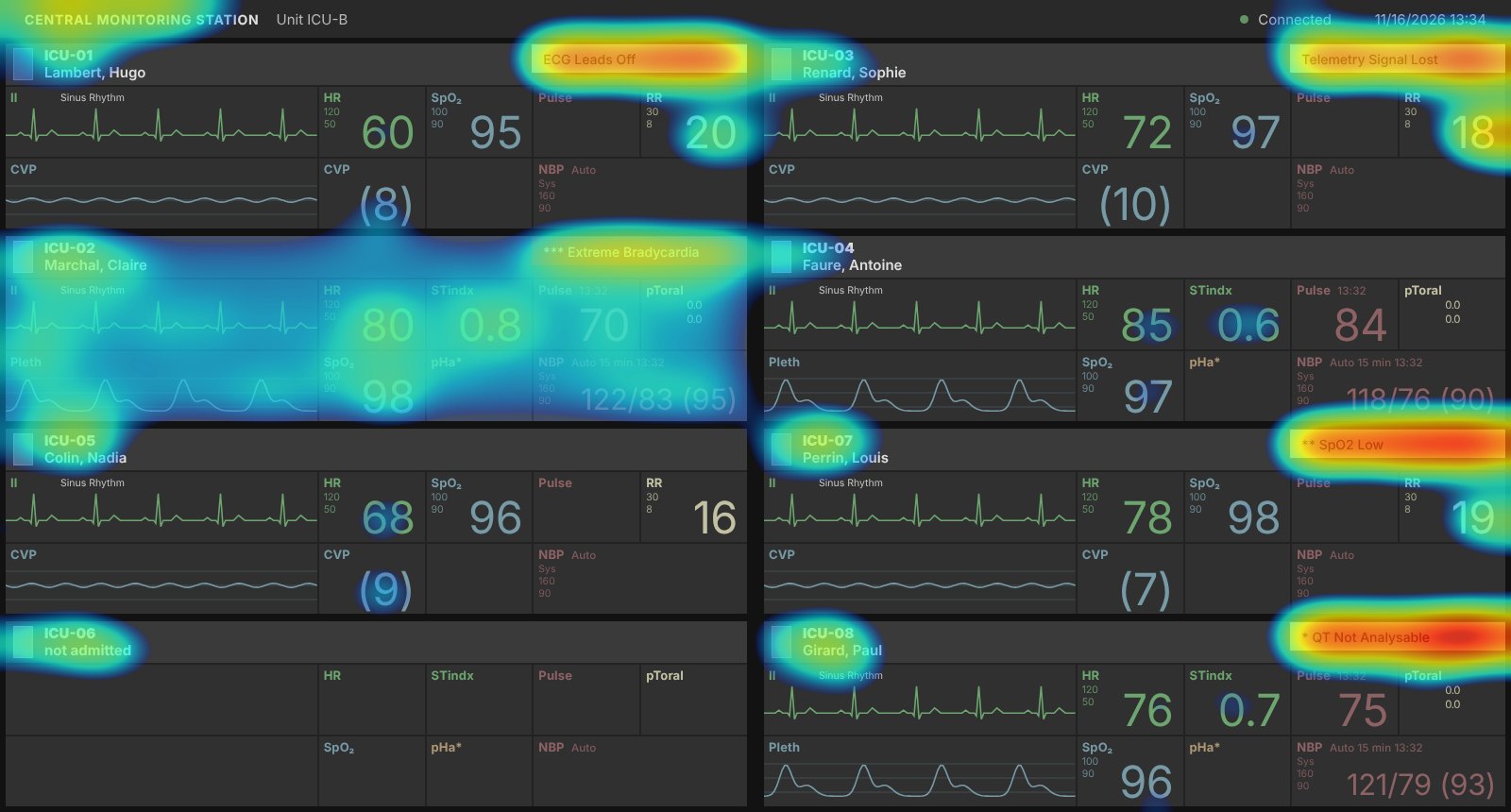
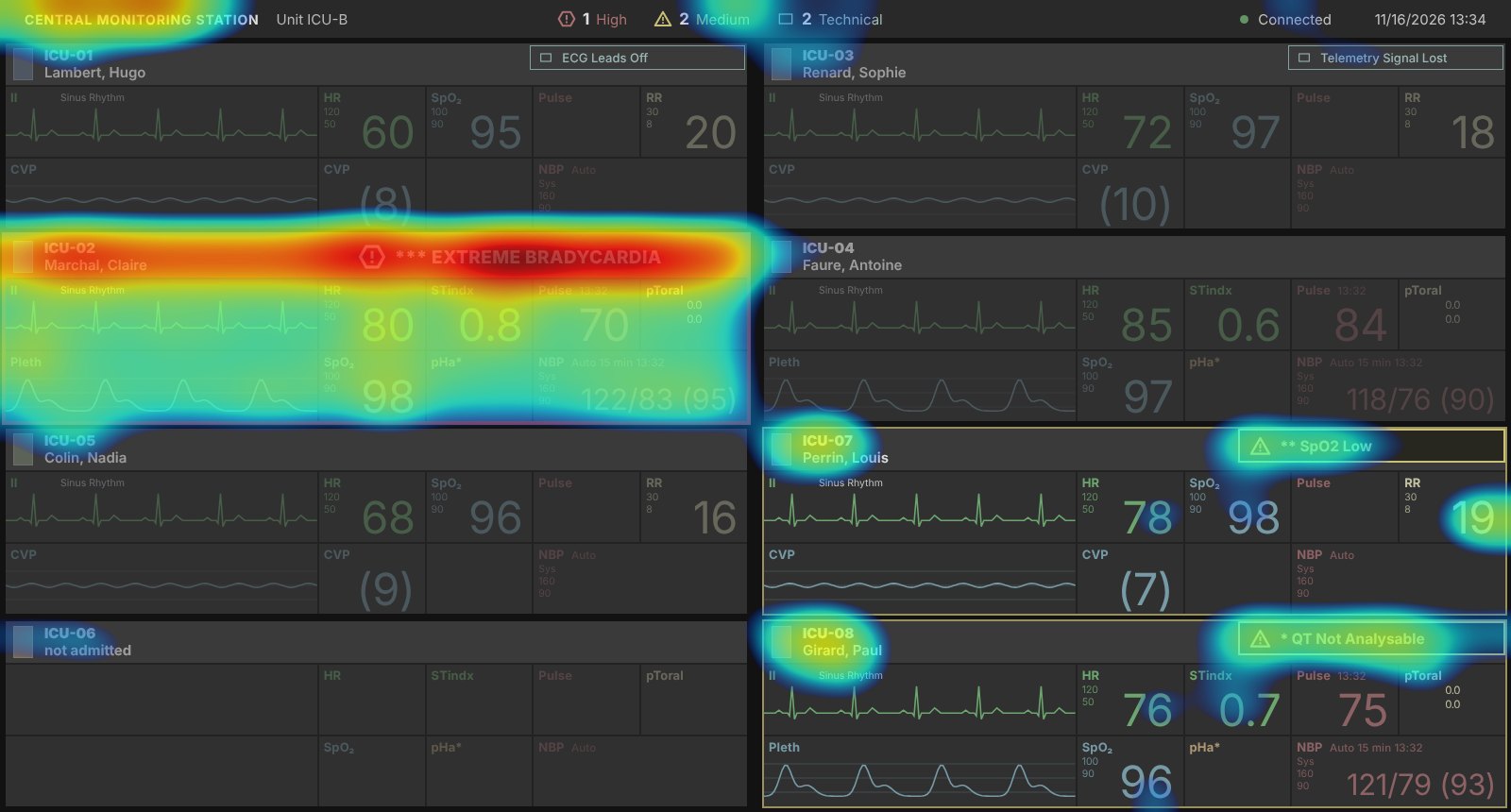
Our ergonomic audit and a visual attention model reveal that with several alarms, the most urgent one became the least visible, which increased the risk of error. Our improvement makes it 2.2 times more visible.
Data analysis · October 2026
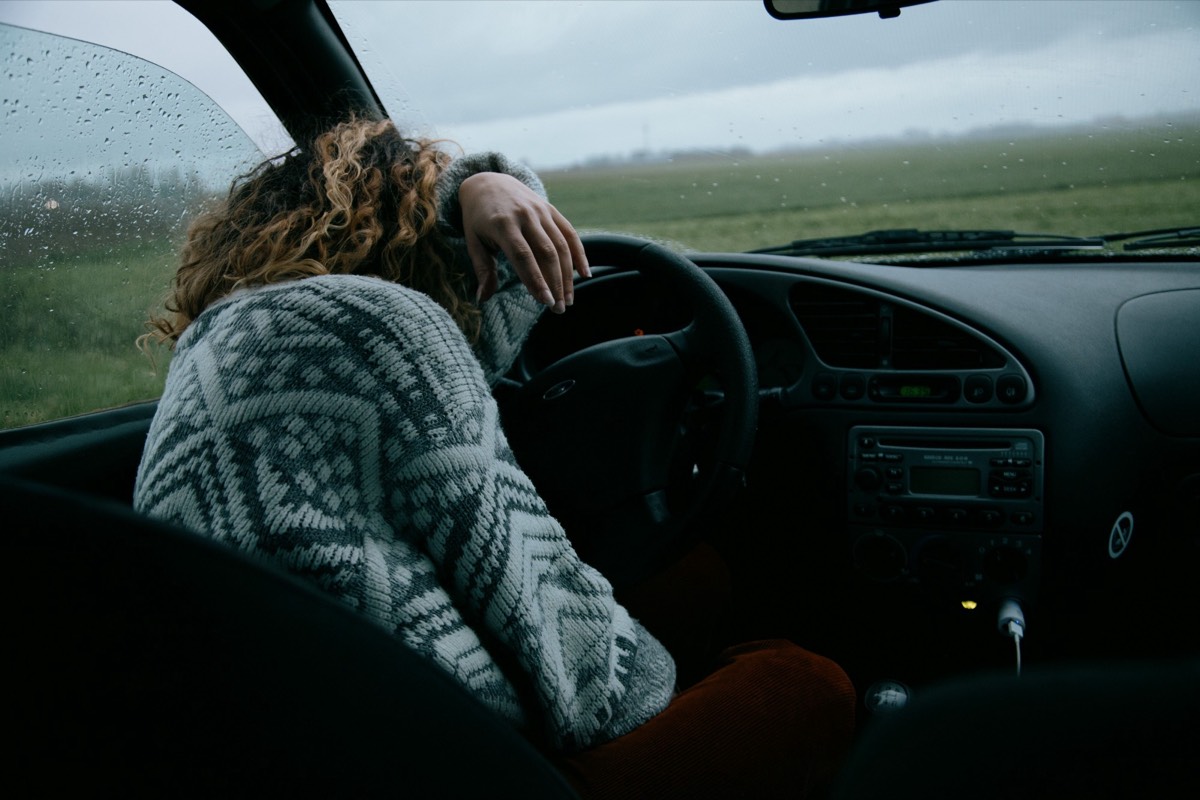
Measuring and predicting fatigue at the wheel could prevent 10 to 24% of crashes. To choose a reliable sensor, we compared several multimodal signals with a reference: a sleep physician’s rating based on electroencephalography (EEG).
Emotion measurement · October 2026
Does a virtual reality scene designed to produce joy actually produce that emotion? With emotion questionnaires, physiological and brain measures, we showed that it did not.
Team

Head of perception and attention
Trained in psychology at Université Lumière Lyon 2, then in cognitive neuroscience at Maastricht University. As project manager of the SENSORIA chair at the University of Lille, she coordinated studies for industrial and academic partners, from protocol and ethics approval to the collection and analysis of EEG and fNIRS data. At Nox, she handles the measurement and analysis of brain signals and studies with participants, including in virtual reality.

Head of human factors and field studies
Trained in cognitive science at the University of Lille. At MEDES, he worked on a space mission simulation run with CNES, designing a study on crew stress, performance and cohesion. He then joined the SCALab laboratory to study the effect of multisensory environments on stress and mental workload, and taught at the University of Lille. At Nox, he leads human factors audits and studies on mental workload, stress and fatigue.
Contact
Write to us: we will suggest a 30-minute call, then a scoping note. Your question, the state of research, what we propose, a quote. Reply within 2 days.
Based in Paris · remote or on site, in France and in Europe · English and French